
The notch on phones became a huge controversy when the iPhone X released in 2017. There were so many different reactions to the huge design change that Apple made on their phone. Some were extremely tired of the previous design that stayed relatively similar for 4 years. On the other hand, there were people who liked the compact design of iPhone 6, 6s, 7, and 8 and were disgusted by the new design of the iPhone X. Although it did feature a larger screen with a smaller body, there was a big notch that cut through the screen. As a result of this, there will always be this black, rectangular box that covers part of the screen and ruins the full experience.
Yes, the notch does ruin the full experience, especially while watching videos, but there were so many phones that came out with a notch after the release of the iPhone X. The main reason, I believe, for this is that a unofficial competition started. By this, I mean that nowadays, a higher-quality phone means having as small of a bezel as the company can make. Since the technology in most companies limit them into using a bezel, there are so many phones that have a bezel now.
There are a few people that would rather have a greater screen-to-body ratio with a notch over a thick bezel without a notch. This leaves companies with three choices: a nearly-bezel less phone with a notch, thick bezels without a notch, new technology that has nearly no bezels and no notch but can be not fully developed.
1. Notch with nearly no bezels
A few phones that fit into this category would be the iPhone X (Xs, Xr as well), Galaxy s10 (s10e), and the LG G7 (and the phones that came after). Of course, there are a lot more phones as well that have some sort of notch. Some pros of this design is that in 2019, there are a lot of apps that take the notch into consideration and are redesigned to work with the notch in between. In addition, the rest of the phone will be nearly bezel-less, allowing more screen with less weight and size. One major con to the notch is how it disrupts the full viewing experience. First of all, as for the iPhone X, the screen size is 5.8 inches. The size is determined by measuring diagonally from one corner to the other. However, what we have to put into consideration is that the notch takes up around 1/2 of the top horizontal area, which means that there is nearly a complete bezel at the top. As a result of this, the actual screen size should be smaller than 5.8 inches. In addition, when we watch content on a phone with a notch, there will be problems since if we want to get immersed in the video by watching it with full screen, the notch will be in the way. However, if we choose to not cut any parts of the video up, the video will be much smaller, hence there will be no reason for a bigger screen.
2. No notch with thick bezels
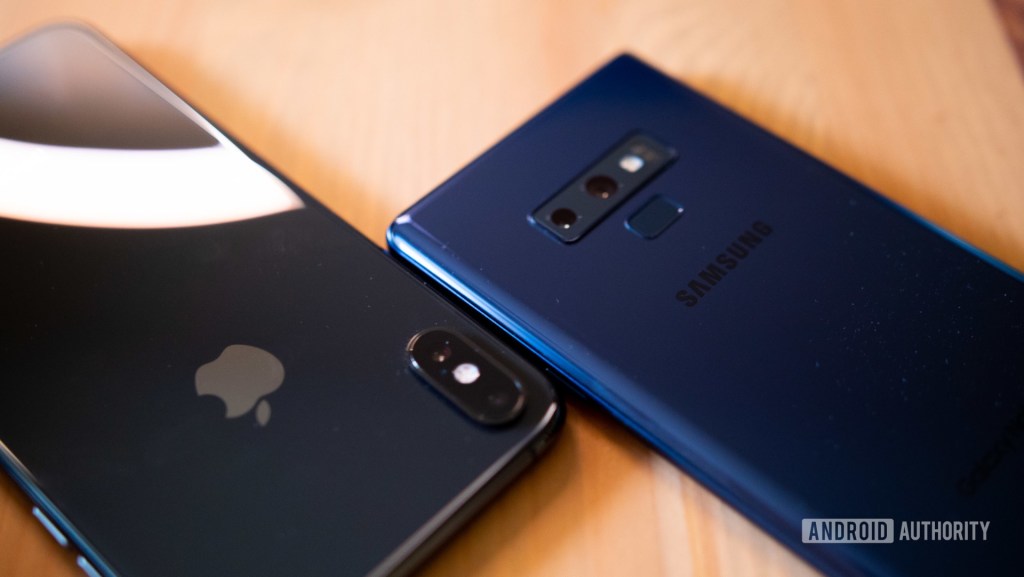
By thick bezels, I don’t necessarily mean iPhone 6 thick because there are other phones with small bezels that do not come with a notch. For example, the Samsung Galaxy Note 9 that I own has relatively small bezels without a notch. However, when compared to the s10+, the bezels seem much thicker and the phone feels a lot bigger although the two phones have the same screen size. I personally am fine with my Note 9 since the screen-to-body ratio is still really high and there is no notch to get in the way of the full experience. However, since nowadays, bezels are getting much, much smaller, it’s harder to say that the Note 9 is nearly bezel-less. The pro of having a Note 9 sized bezel is that it’s like a compromise between having thick bezels and nearly no bezels and so there is not much problem with it. However, if the bezels get as thick as previous iPhones and Galaxy phones, some cons follow. For example, the phone may get pointlessly heavy, not because of the screen size but because of the huge bezels. Also, there will be a less satisfying viewing experience since there are such big blocks on the side. Although having bezels aren’t really a problem, it just feels outdated and unimpressive.
3. New technology with nearly no bezels and no notch
This is the most risky choice, at least as of 2019. An example of a phone that meets this criteria is the Samsung Galaxy A80. This phone has almost only screen in the front and includes no notch watchsoever. There is one camera that is placed at the back, but when you want to take a selfie, the camera at the back would twist over to the front. This type of technology is amazing since it basically solves all of the previous problems. The problem is, however, that new problems arise. There can be so many problems that occur during the process of flipping the camera over to the front since it’s not a technology that has been fully developed.
 Rachel’s Reviews